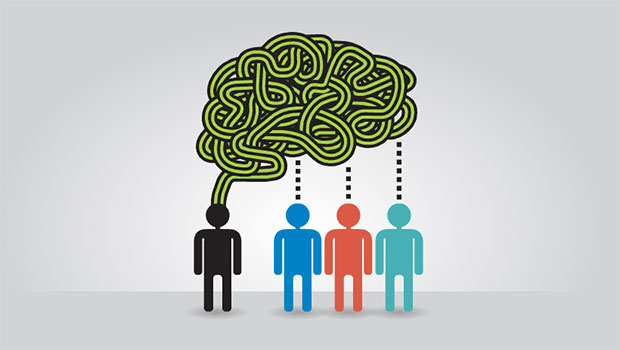





Learning is fast turning Social, Informal, & Mobile.
That’s the message I’ve been hearing loud & clear from Learning Technologies 2010. While what’s being said in most of the sessions isn’t entirely new to us, it does reaffirm the direction in which things are going. The level of participation in these areas was clearly visible at the event which is a good sign. Adoption, after all, will happen only when L&D professionals start making some sense of it in first place.
Here are some highlights from the Day 1 sessions I attended:
1. Key Note by Lord Puttnam.
Lord David Puttnam is the producer of movies like Chariots of Fire & The Killing Fields, chairman of FutureLab and Chancellor of OpenUniversity. He had a simple but strong message. We need to prepare our children for the right skills and the current education system is not good enough for that. Watch the video below to get an idea of what he is saying. He also reiterated what I personally believe in strongly – that we learn from making mistakes and by trying again & again until we succeed. He summed up the keynote address with – “My biggest fear is in twenty years education itself would be discredited in the eyes of our children”. Worth a thought!
As L&D professionals we need to reflect on this: How are we preparing our workforce for the future?
2. From Content to Community: The changing face of L&D by Jane Hart.
Jane (@c4lpt) has really been on the forefront of everything related to Social Learning. She has written many articles on the subject and collated so much information on her site – it’s virtually the bible of Social Learning.
Her presentation focused on 5 different ways in which Social Media is being used for learning:
– Formal Structured
– Personal Directed
– Group Directed
– Intra Organizational
– Accidental & Serendipitous
She talked about need for new mindset (for e.g. recognition of self directed learning), new platforms (assuming that LMS systems don’t change – with which I disagree as UpsideLMS now has a social media pack available), and new skills (to manage learning in this changed environment)
The fact is Social Learning is coming at us like a revolution. L&D professionals would do well to accept this fact and start working to adopt the paradigm or risk being pushed into oblivion.
3. Using a web 2.0 social learning environment by Peter Butler.
Peter Butler is the Director of Learning at BT Group. Peter shared how BT has implemented social learning across the enterprise. He shared this video below about their Dare2Share portal that’s really the backbone of social learning at BT.
It was encouraging to see that what we discuss and propose to our clients is being successfully used at such a large scale. A few things that I really like about the Dare2Share platform are:
– There is a tag cloud presented in the right panel (similar to what you see on this blog) which helps users select their areas of interest.
– Users can report inappropriate content easily, though they have never had any such complaint so far. Goes on to show that the fears of people posting inappropriate content on social networks are really baseless.
– When you get to the right content piece, you could right click to see some further action options – including contacting the author of that content. Nice integration of systems there.
4. What Cloud Computing means for Learning by Stuart Lauchlan
Stuart is the editor of businesscloud9.com (part of siftmedia). He talked about the benefits of cloud computing (cheaper, easier, more scalable) and some of the prominent successes (salesforce.com, Google, etc). What stands out is distinct lack of standards in cloud computing as the bigger players don’t want to participate in creation of one.
5. The new smart devices for learning by Steve Wheeler
Steve Wheeler (@timbuckteeth) spoke of eLearning 3.0 as a combination of
– Distributed (cloud) Computing
– Extended Smart Mobile Technology
– Collaborative Intelligent Filtering
– 3D Visualization and Interaction
Here’s the presentation he shared at the conference:
6. Building Workforce capability with Experiential Learning by Charles Jennings
Charles is the Director of Duntroon Associates. He cited Deborah Compeau’s ( a professor at Richard Ivey Schools of Business) Jan 2010 research to bring up six types of learners. This research interestingly is focused on how people in organizations develop their technology skills. Not sure if it’s a good idea to assume similar behavior for developing all other types of skills as well, while it is tempting.
The six types are
- –Purposive planners: structured & self-disciplined
- –Explorers: find time to learn on their own
- –Visionaries: find out about new technology and how it could impact them/organization
- –Problem Solvers: Strong task oriented mindset. Not necessarily interested in technology
- –Reluctant Learners: Focus on what they need to learn to survive
- –Pinballs: Don’t think about learning. Do a lot of incidental learning
Assuming that we can use this categorization for all kind of skills, Charles argument was to use experiential learning for everyone except the Purposive Learners. From my experience these would be a small minority so practically for everyone you should use experiential learning. An acceptable conclusion given that almost all workplace learning is to ensure learners are able to perform better and what better than experiential learning in some form – be it simulation, scenarios, or games – to achieve that. Overall this was a very informative session and could be have been better if we hadn’t assumed all the participants to be ‘purposive planners’ and bring in some experiential learning into it.
That’s day 1 for you. Look out for a recap of day 2 next week.